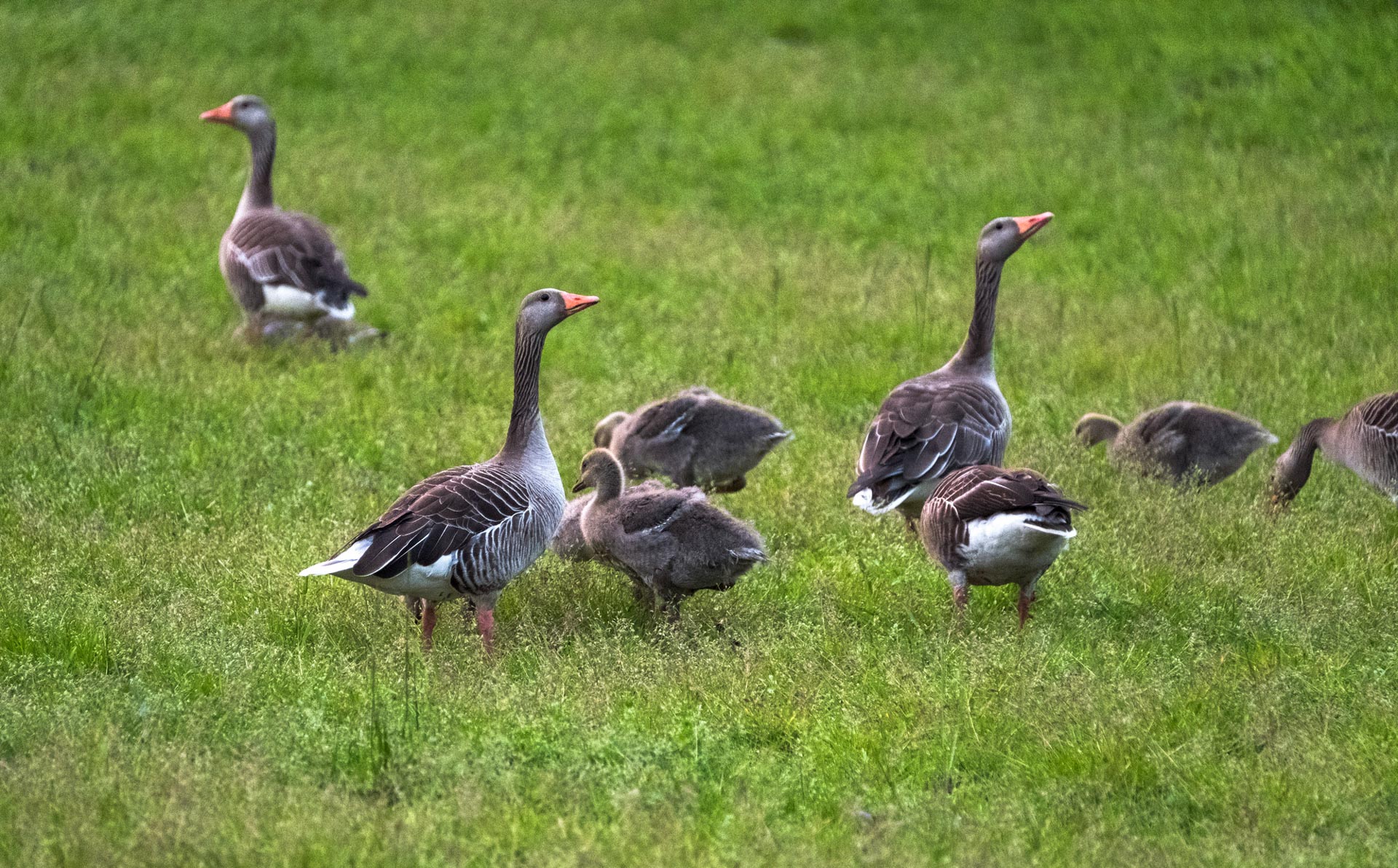
Graylag goose is a common breeding species on Vega. Photo Guri Dahl/Norges verdensarv.

Vega is a rich area for birdlife, and many seabird species breed, molt and spend the winter here.
Graylag goose is a common breeding species on Vega. Photo Guri Dahl/Norges verdensarv.
Vega is a kingdom for seabirds. The vast shallow waters surrounding Vega and the island's wetlands provide an abundant food supply for seabirds. Due to the significance of the Vega Archipelago and the wetlands on Vega for various bird species, Vega is included on BirdLife International's list of the most important bird areas in Europe.
The area is vital for seabirds as a site for nesting, resting, and overwintering. The region supports healthy populations of loons, grebes, cormorants, black guillemots, and eiders. During the winter, many diving ducks and grebes inhabit the area. The black guillemot is another numerous nesting bird that is also commonly seen among the islands during the winter.
The majestic white-tailed eagle is a common sight in both summer and winter, and with a wingspan of up to 2.6 meters, it is hard to miss. The archipelago is an important molting area for eiders and greylag geese. The area also serves as a key stopover for barnacle geese migrating from Scotland to Svalbard in the spring.
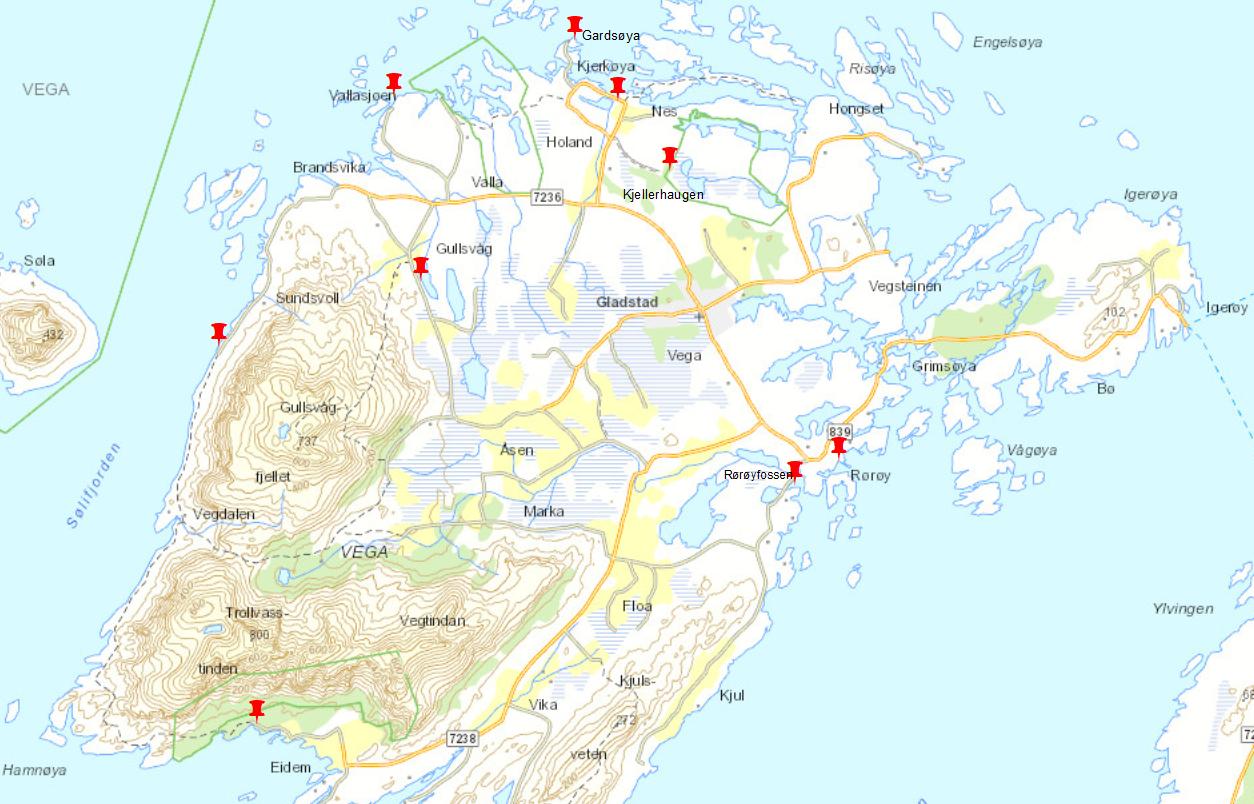
In the document below, you will find tips on great locations for birdwatching on Vega:
Birdwatching map from the Protected Area Board.
The unique interaction between humans and eiders is a major reason why the Vega Archipelago has been granted World Heritage status. Many who visit us want to learn more about the eiders and the special tradition of harvesting their down. The Vega World Heritage Center is the perfect place to start. If you want to experience the eiders in the wild, it can sometimes be a bit more challenging. Eiders prefer life out among the small islands, and they are not always easy to spot when visiting the main island of Vega, but below you will find information and tips on when and where you might be able to see them.

The common eider overwinters in Norway, migrating short distances to ice-free areas where they can find food. There are various overwintering sites, including deep within the fjords. Unfortunately, there has been little research into where the eiders spend the winter, but it is likely that a portion of the population stays out among the Vega islands.
In the spring, eiders gather in large flocks and move toward the shore and their nesting grounds. The male is in winter plumage, appearing black and white with an olive-green nape, while the female is brown-speckled. The birds are now looking for a partner before the mating season. This is the time to hear the beautiful call of the male, the "e-kall," as he tries to attract a female, known locally as the "e-gåkkå." His call sounds like a calm, deep "ao-o-ao." The female responds with a more cackling sound, hence the local nickname "e-gåkkå."
These flocks can be found both out among the islands and around the main island. Binoculars or a spotting scope are recommended if you want to get a good look at them.
In May, eider pairs begin heading toward land to find a nesting site. Many birds seek out the islands where they know bird guardians have built houses for them, while others build nests in the open. Eiders prefer nesting sites on small islands where they can have peace and quiet while incubating their eggs.
The male leaves the female once she begins sitting on the nest. He spends the summer out on the outermost skerries, where he molts (loses his feathers and grows new ones) into his summer plumage—turning a grayish-brown that makes him look more like the female. During this period, he is very shy and we do not see much of him.
In June/July, after incubating the eggs for nearly a month, the female leaves the nest with her ducklings. They spend the summer at sea, searching for food in the shallow kelp forests.
During this time, you can see female eiders with their broods among the islets, even near the main island. It is a great idea to have binoculars handy so you can get a better look at them.
If you are out in a boat, please remember not to drive close to the mother eider and her ducklings, as they are very vulnerable during this time.
By late summer, the eider ducklings are large enough to fend for themselves, and the female now molts her plumage as well. In the autumn, females, males, and young birds gather in flocks again and eventually migrate to various wintering grounds.