Vega World Heritage Centre
The Vega World Heritage Centre is the gateway to the Vega Archipelago World Heritage site – a living World Heritage area on the outer Helgeland coast. Learn how the fisherman-farmer way of life, the cultural landscape, and the eider duck tending tradition over more than 1,500 years led to its World Heritage status.
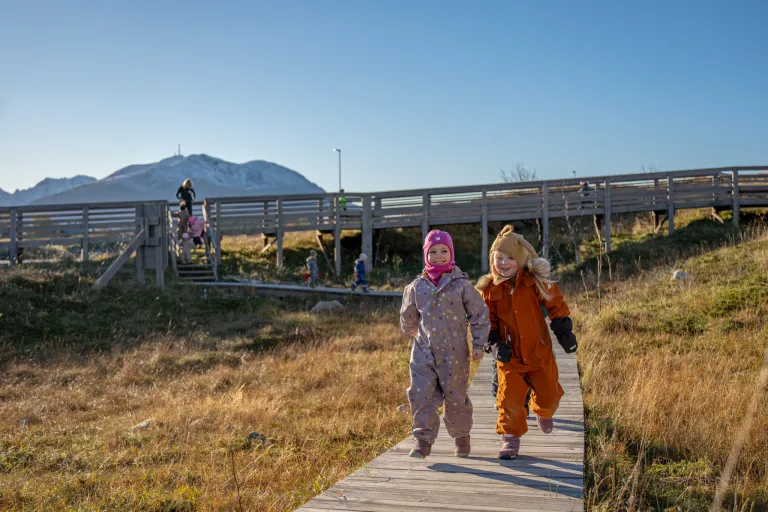
The World Heritage Centre is beautifully situated on Gardsøya, and around the centre runs the World Heritage Trail with information boards. Photo: Ina Andreassen.

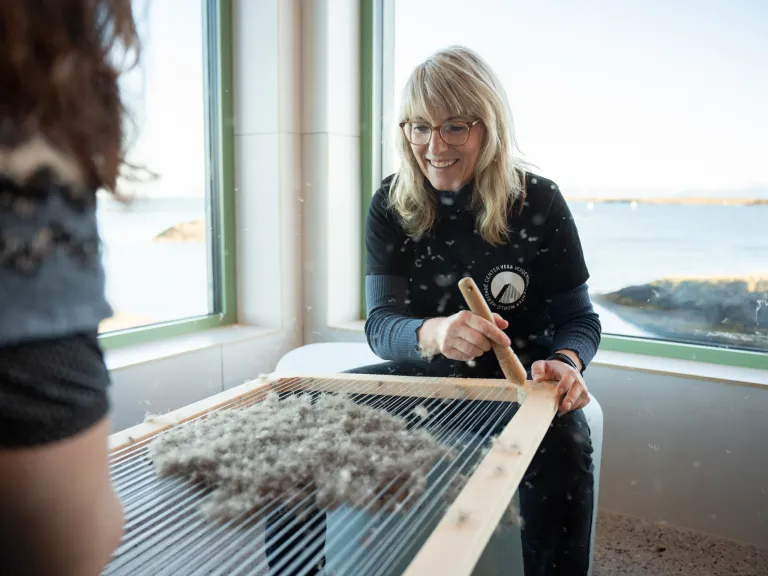
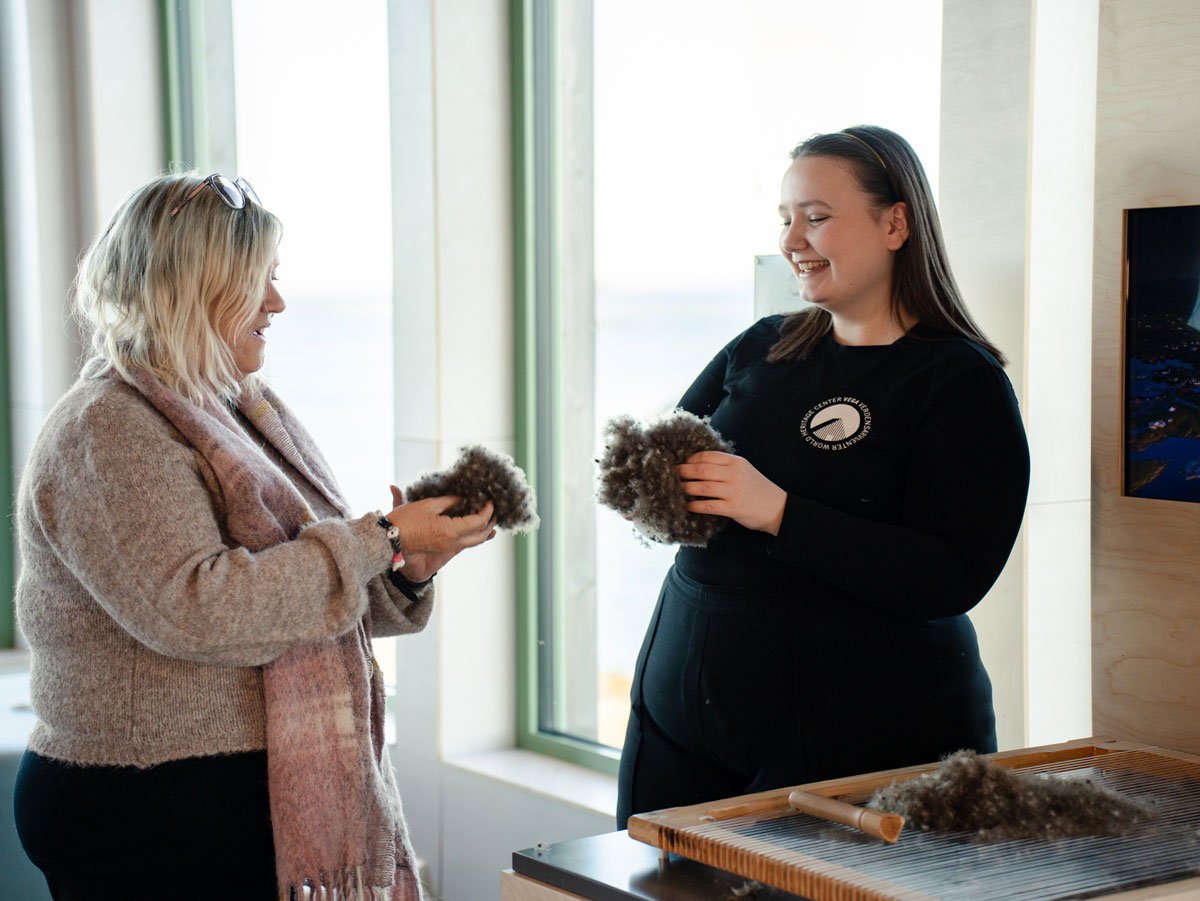
At the Vega World Heritage Centre, you'll gain insight into how the islanders both sustained themselves from and preserved nature. In the barren landscape, they had to make the most of every resource. While the wife managed the small farm with a couple of cows and some sheep, the husband was at sea, providing income and food through fishing. Additionally, they built shelters and nests for the wild eider ducks, so they could collect and clean the precious eiderdown once the ducks left their nests with their young. This was mainly the responsibility of the women. The exhibitions also tell the geological history of the archipelago, with its rich animal and plant life. Interactive exhibits for children are available throughout the exhibition and in the children's room.
We also have a cozy café serving simple dishes and a diverse shop featuring local products and a wide selection of books.
Our exhibitions
Main Exhibition - Wild Beautiful Vega
What makes the Vega Islands so unique that they ended up on Unesco's World Heritage List? You'll find the answer in the "Wild Beautiful Vega" exhibition.
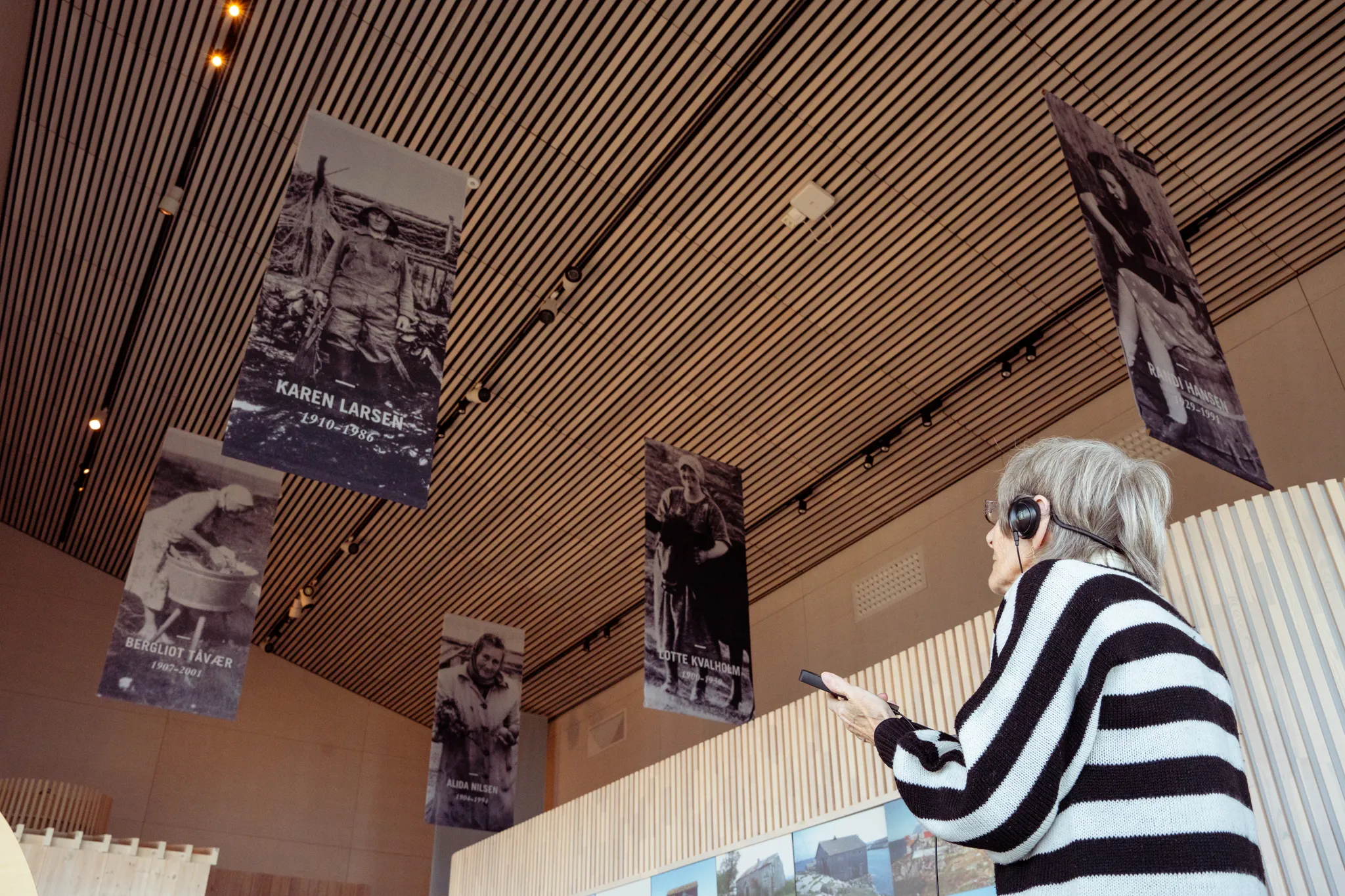
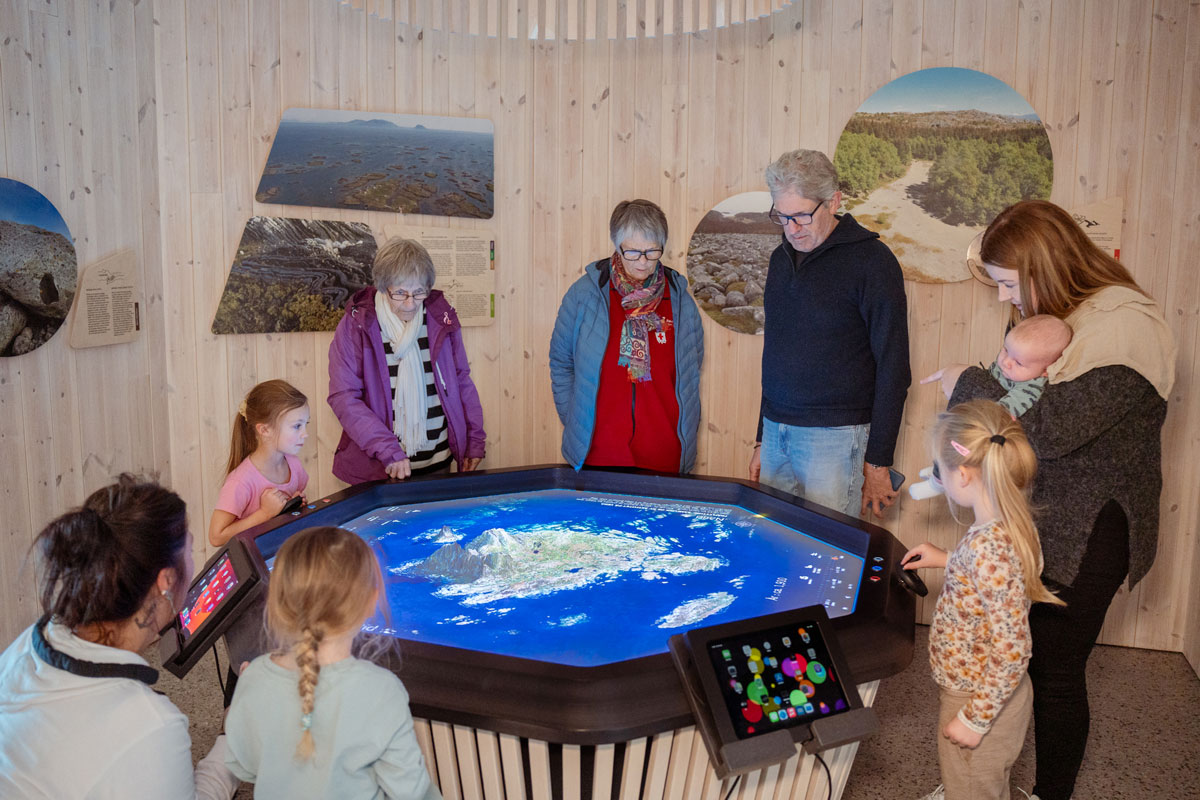
The exhibition takes you on a journey from the Stone Age to the present day. Here you'll learn how islanders have lived in balance with nature through fishing, farming, and the unique tradition of eider duck tending that is still maintained. The stories are conveyed through exhibits, film, artifacts, and audio stories told by the islanders.
In addition to the main exhibition, there is an interactive geology exhibition created in collaboration with Trollfjell Unesco Global Geopark, several films about Vega and the World Heritage site shown continuously in our cinema room, and a temporary exhibition.
You can choose to explore the exhibitions on your own, listen to songs and stories from Vegaøyan on our audio guide, or inquire at the reception about a personal guided tour.
Our World Heritage
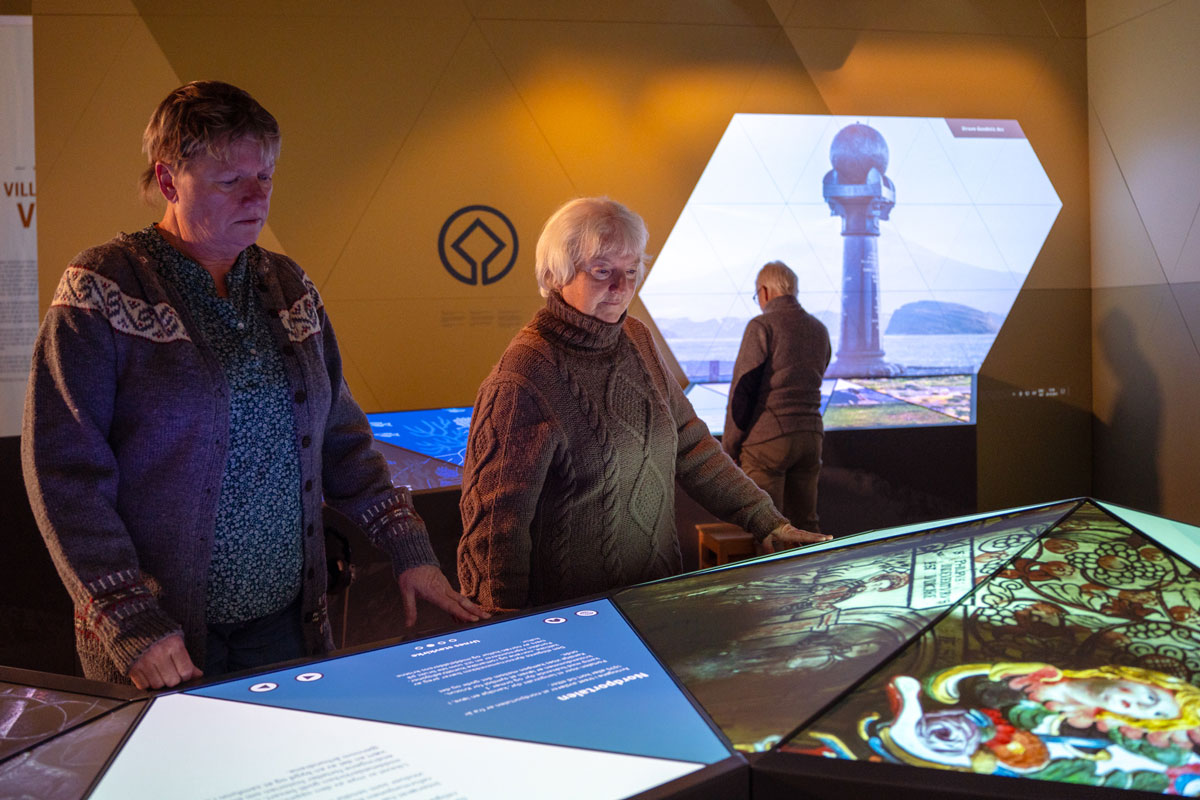
This digital exhibition tells the story of UNESCO and World Heritage. It is excellent for understanding more about the purpose and significance of World Heritage, also for future generations. The exhibition is interactive, allowing guests to explore maps, texts, and images of World Heritage sites of interest, both in Norway and globally.
This exhibition is twofold, with the second part located outdoors at the entrance. The outdoor part of this exhibition is thus accessible to everyone, all year round.
Read more about the Vega World Heritage.
Children's world heritage centre
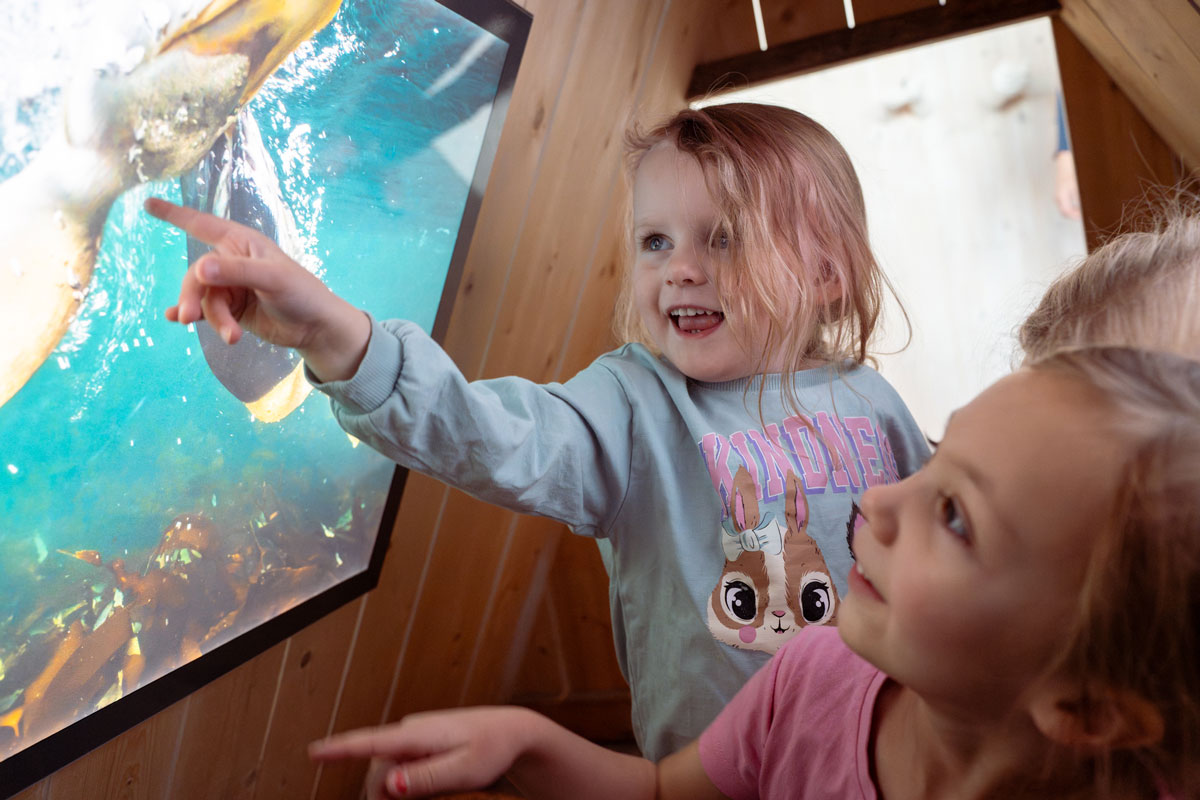
Which two celebrities received eiderdown duvets from Vega as birthday presents when they turned 70 years old? What is life like for an eider duck family inside the eider houses that people build for them? And would you like to learn to sing like an eider duck?In that case, we would recommend exploring the Children's World Heritage Centre exhibition. The exhibition is spread out throughout the exhibitions, near the reception and in the children's room. Look for the eider duckling Elsa to find them.

As part of our educational outreach about the Vega World Heritage site, we have created a family quiz that guests can take with them through the exhibitions to find the answers. More information and answer sheets are available at the reception. Hand in your completed answer sheet at the reception to be entered into a draw for great prizes.
Café & shop
The World Heritage Café
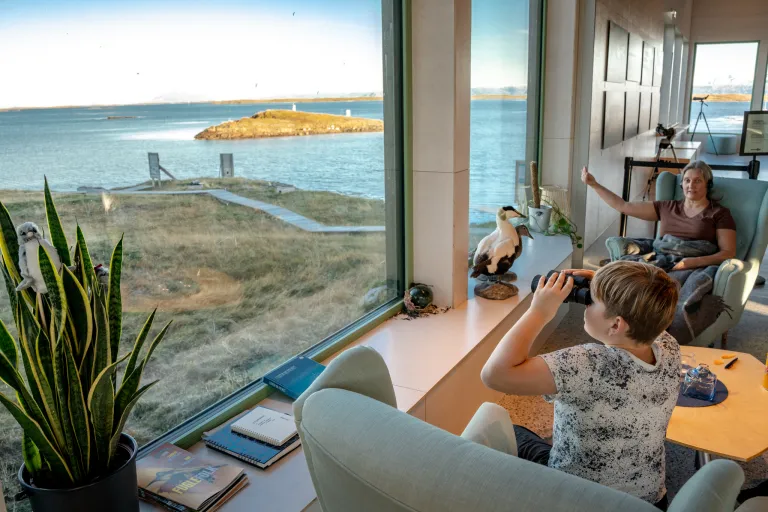
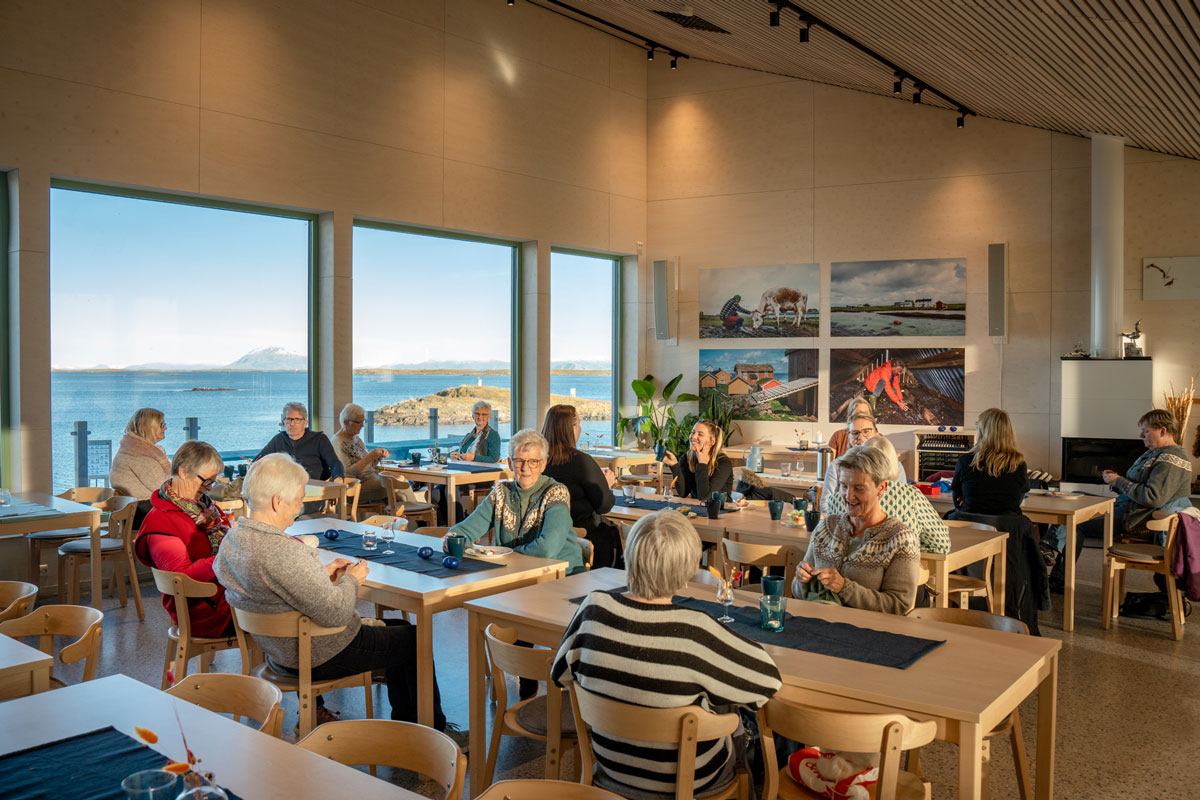
Whether the north wind whips up the sea or the sunset paints the archipelago pink, the view from the centre is equally stunning. From the café windows, you can see mountains The Seven Sisters, Dønnamannen, and the island Lovund. During the season, the café has skilled chefs who serve dishes based on local ingredients. Outside of the season, simple refreshments like coffee and waffles are served.
From the first week of June until August 2, 2026, ARV & HAV offers its delicious menu at the center. Find them on www.facebook.com/arvoghav
Shop
In the shop, you'll find items related to the World Heritage site: local crafts and practical items made from natural materials; books for all ages about the World Heritage site, eider ducks, nature, and coastal life; and meaningful gifts and souvenirs – perfect for yourself or someone you want to surprise.
The cafe and shop follow the center's opening hours – but can be visited independently of an admission ticket.

Outdoor area
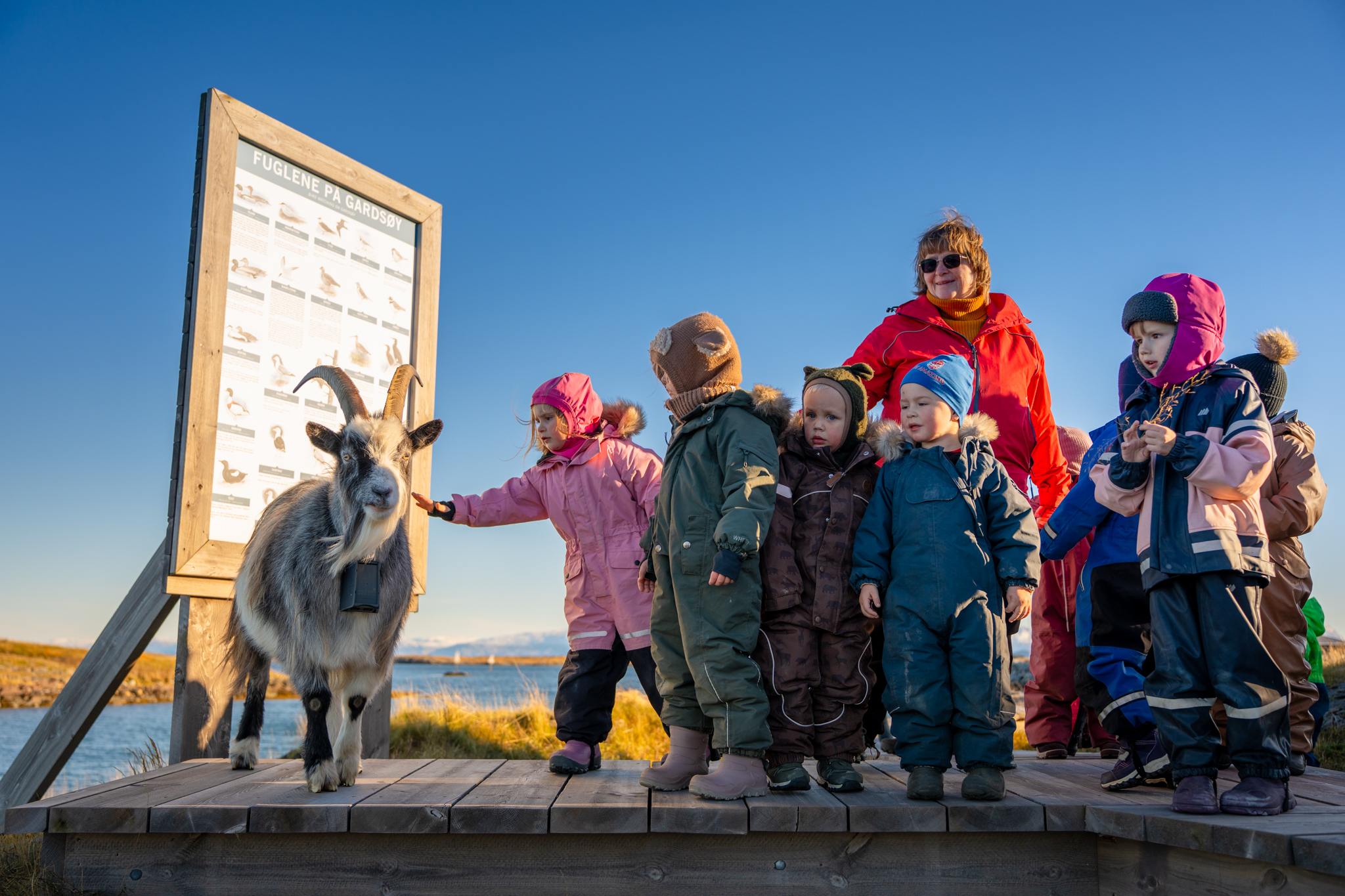
The World Heritage Trail runs around the center – a developed trail with several interpretive points. Information boards along the trail describe, among other things, the cultural landscape, birds, marine life, and eider houses (shelters built for eider ducks). There are also several examples of how eider houses are constructed and can look like. During the summer, we have coastal goats grazing in the area around the center.
On the terrace by the entrance, there are benches and tables for our visitors, in addition to information about the World Heritage, nature, and geology. There is also a play boat for children.
Directions
The center is located on Gardsøya, at the northern tip of Vega. You can easily get here by bike, car, or on foot. On Vega, follow the road signs to "Vega World Heritage". Many choose to combine their visit with a boat trip or island hopping.
Express boat and ferry
Please note that there are two express boat stops on Vega. The nearest stop is at Gardsøya, just a few minutes walk from the centre. The other express boat stop is at Rørøy, on the eastern side of Vega. The ferry stop is at Igerøy, to the northeast of Vega. Check the timetables here:
Accessibility and facilities
Here you will find useful information about your visit to the Vega World Heritage Centre – including facilities and services available to the public.
Reception and Information
At the reception, you can get assistance with anything you might need during your visit. Here you can obtain maps and brochures, information about exhibitions, activities, and guided tours, as well as purchase or collect tickets.
Restrooms
Universally designed restrooms are available at the centre.
Storage
For the protection of the exhibitions, we kindly ask that larger items such as backpacks, umbrellas, and similar objects are not brought into the exhibition areas. Storage facilities are available near the reception.
Children
A changing table is available in one of the toilets.
Accessibility
Visitors may use their own wheelchairs. The centre has guidance paths throughout the exhibitions. Ask at the reception if your child needs accomodation to experience the exhibitions for children. We have the audio stories and pictures from the play houses in both english and norwegian on specific audioguides and in booklets.
Food and Drink
Food and drink are not permitted in the exhibition areas. The centre offers refreshments in designated areas. You are welcome to enjoy your own packed food outdoors in the surrounding area. We kindly ask that the area be used with consideration for nature and other visitors.
Mobile and Technology
Free Wi-Fi is available. We kindly ask that mobile phone use be limited in the exhibition areas, and that calls be taken in common areas. Please use headphones with audio guides.
Animals
Leashed dogs are welcome outdoors but are not permitted inside the building.